
Pantai Samuh
Informational guide to Pantai Samuh, a hidden beach in Nusa Dua Bali with cultural rituals and conservation programs
 Cloudflare Pages
What it is
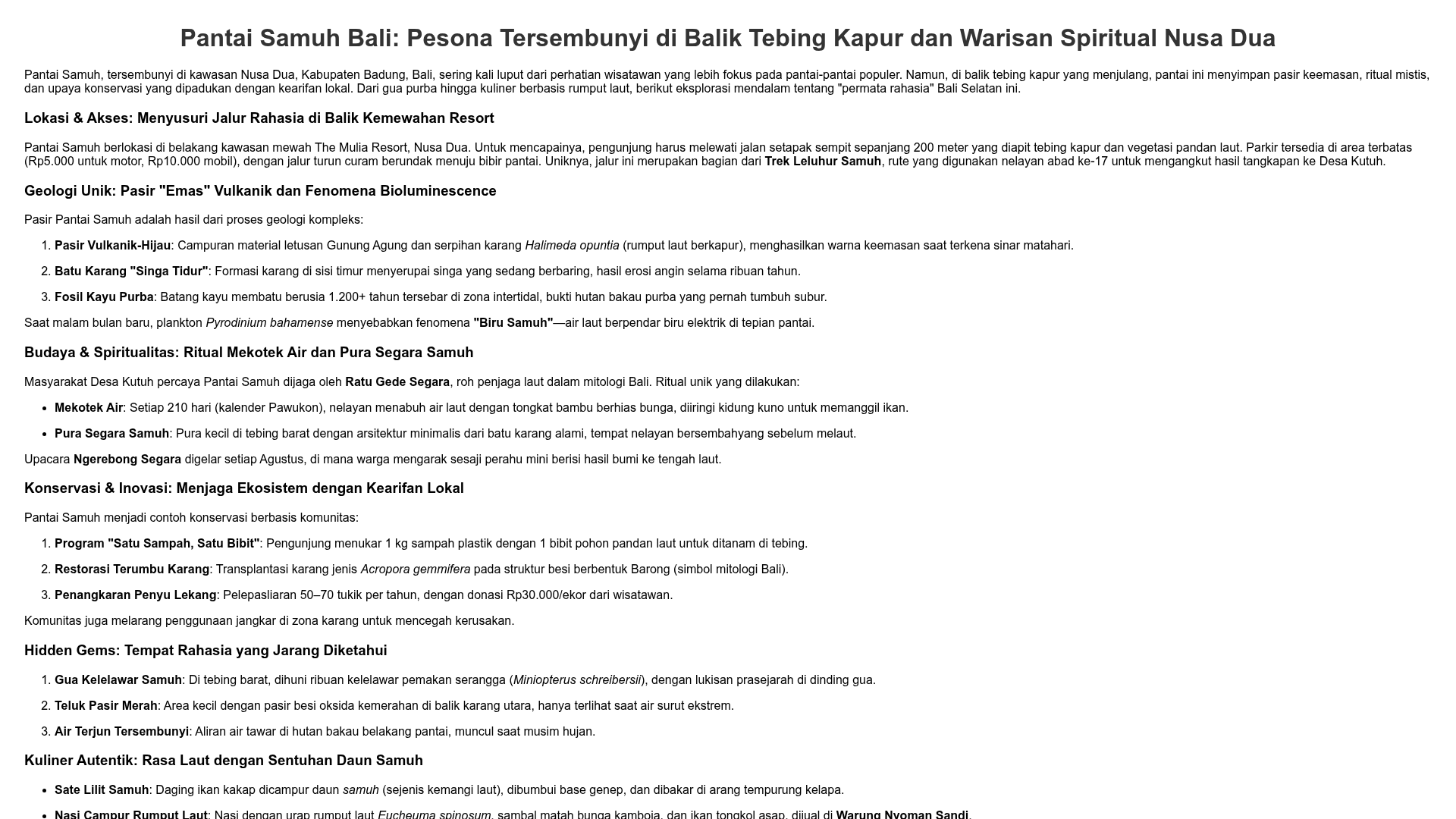
Pantai Samuh is a secluded beach destination in Nusa Dua, Badung, Bali that combines natural beauty with deep cultural heritage. The site provides comprehensive information about this hidden gem located behind The Mulia Resort, accessible via a 200-meter footpath through limestone cliffs and pandan vegetation. Visitors learn about the unique volcanic-green sand formed from Mount Agung eruptions and Halimeda opuntia seaweed, the Singa Tidur coral formation, and ancient petrified wood fossils dating over 1,200 years.
The guide details spiritual practices including the Mekotek Air ritual performed every 210 days on the Pawukon calendar, Pura Segara Samuh temple on the western cliff, and the annual Ngerebong Segara ceremony each August. Conservation initiatives are highlighted such as the One Trash One Seedling program exchanging plastic waste for pandan seedlings, coral restoration using Barong-shaped structures, and turtle hatchling releases.
Hidden attractions covered include Samuh Bat Cave with prehistoric paintings, Red Sand Bay with iron oxide sand visible only during extreme low tide, and a seasonal freshwater waterfall in the mangrove forest. Culinary recommendations feature Sate Lilit Samuh with sea basil, Nasi Campur Rumput Laut with Eucheuma seaweed, and Es Kelapa Dewa Baruna served in carved coconut shells.
Practical visitor guidance addresses the best visiting times from April to October, essential gear like water shoes and flashlights for cave exploration, cultural etiquette for rituals and coral protection, and environmental contribution options. The site acknowledges ongoing challenges including cliff erosion of one to one and a half meters annually and weekly plastic waste influx of 40 to 60 kilograms, alongside community solutions like geotube installation and plastic-free sunset campaigns.
This description was generated by AI from the site's public content and may contain errors.
What you can do there
- Beach access and snorkeling in bioluminescent waters
- Cultural ritual observation and temple visits
- Conservation program participation
- Cave exploration with prehistoric art
- Authentic local seafood and seaweed cuisine
Who it's for
Travelers seeking off-the-beaten-path Bali destinations with cultural depth and eco-tourism focus
Frequently asked questions about pantaisamuh.pages.dev
›Where is Pantai Samuh located?
Pantai Samuh is located in Nusa Dua, Badung, Bali behind The Mulia Resort, accessible via a 200-meter footpath through limestone cliffs.
›What makes the sand at Pantai Samuh unique?
The sand has a golden color from a mix of volcanic material from Mount Agung and calcareous Halimeda opuntia seaweed fragments.
›When is the best time to visit Pantai Samuh?
April to October is ideal, with mornings from 6 to 8 AM for snorkeling and evenings from 5 to 6:30 PM for sunset viewing.
›Are there cultural rituals visitors can observe?
Yes, the Mekotek Air ritual occurs every 210 days on the Pawukon calendar, and the Ngerebong Segara ceremony takes place each August with miniature boat offerings.
›What conservation programs operate at Pantai Samuh?
Programs include coral transplantation on Barong-shaped structures, turtle hatchling releases, and a plastic-for-seedlings exchange initiative.
›What hidden attractions exist at Pantai Samuh?
The site features Samuh Bat Cave with prehistoric paintings, Red Sand Bay visible only during extreme low tide, and a seasonal waterfall in the mangrove forest.
›What should visitors bring for a trip to Pantai Samuh?
Water shoes for slippery surfaces, a flashlight for cave exploration, and a donation of 20,000 rupiah for reef restoration programs.