
Mpi4py
MPI bindings for Python enabling parallel distributed computing
 GitHub
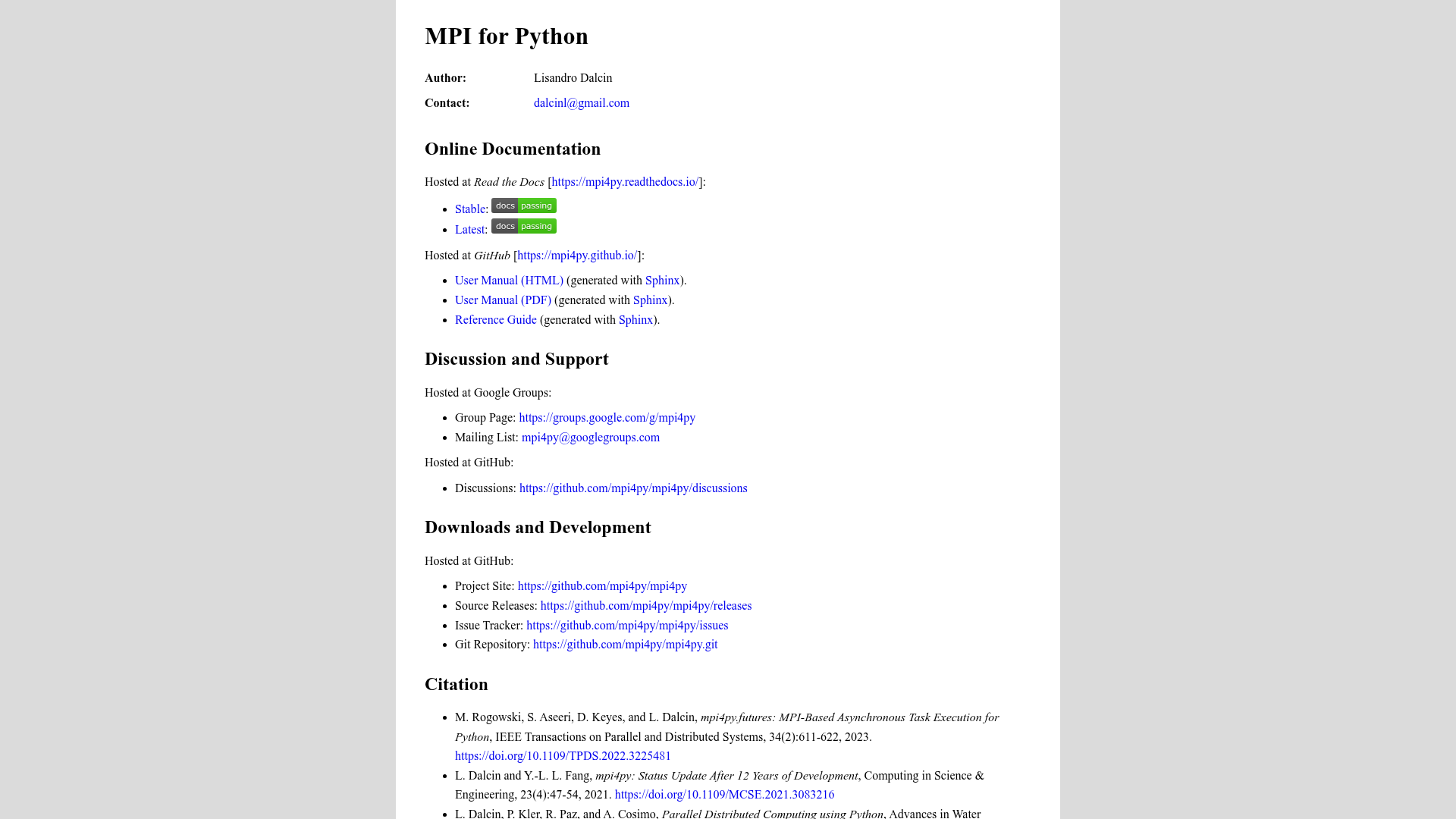
What it is
MPI for Python (mpi4py) provides bindings of the Message Passing Interface standard for the Python programming language. The project enables Python programs to exploit multiple processors on parallel computers and clusters using the MPI specification. It supports both point-to-point and collective communications, as well as advanced MPI-2 features like one-sided communication and dynamic process management.
This description was generated by AI from the site's public content and may contain errors.
What you can do there
- Read user manual and reference guide
- Download source releases
- View source code repository
- Join community discussions
- Report issues and track bugs
Who it's for
Python developers, HPC researchers, scientific computing practitioners
Frequently asked questions about mpi4py.github.io
›What is mpi4py used for?
mpi4py is used for parallel distributed computing in Python, allowing programs to run across multiple processors using the MPI standard.
›Where can I find the mpi4py documentation?
The user manual and reference guide are hosted at Read the Docs and also available as HTML and PDF on the GitHub Pages site.
›How do I install mpi4py?
Installation instructions are provided in the documentation, typically via pip or conda after installing an MPI implementation like MPICH or OpenMPI.
›Is mpi4py free to use?
Yes, mpi4py is open source software freely available on GitHub under a permissive license.
›Where can I get help with mpi4py?
Support is available through the Google Groups mailing list and GitHub Discussions page linked from the project site.
›Does mpi4py support MPI-2 features?
Yes, mpi4py includes support for MPI-2 extensions such as one-sided communication and dynamic process management.
›Can I cite mpi4py in academic work?
Several peer-reviewed publications are listed on the site for citing mpi4py in scientific and engineering research.