
Kydb
NoSQL database abstraction layer for financial services with union and caching features
 ReadtheDocs
What it is
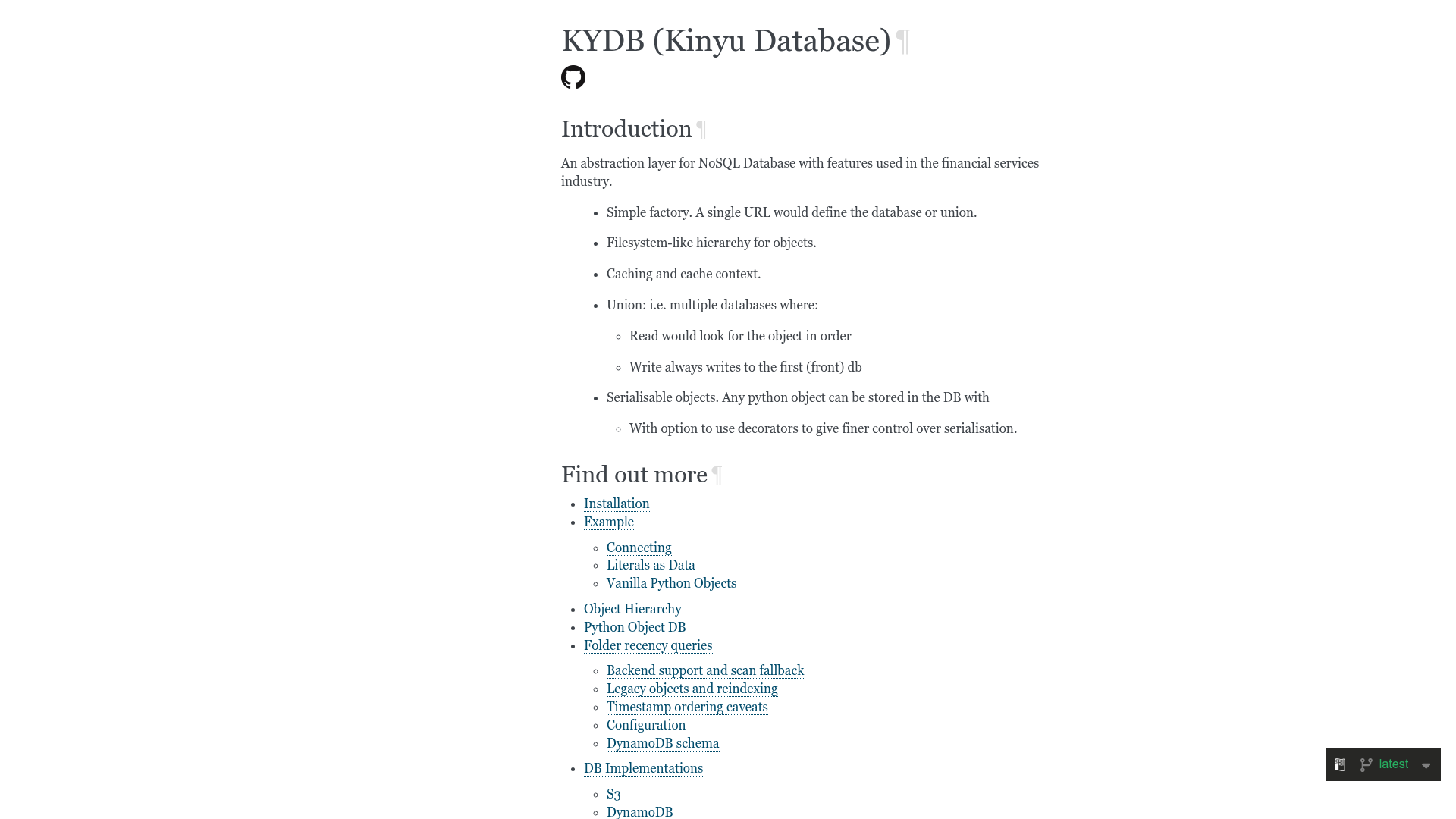
KYDB (Kinyu Database) is an open-source Python library providing an abstraction layer for NoSQL databases with features tailored for financial services. It offers a simple factory pattern where a single URL defines the database or union of databases, enabling developers to switch backends without changing application code.
This description was generated by AI from the site's public content and may contain errors.
What you can do there
- Read comprehensive documentation and API reference
- Install the Python library via pip
- View code examples for common use cases
- Explore supported backend implementations
- Review developer guides and testing practices
Who it's for
Python developers building financial applications with NoSQL databases
Frequently asked questions about kydb.readthedocs.io
›What databases does KYDB support?
KYDB supports multiple backends including DynamoDB, S3, Redis, in-memory storage, HTTP/HTTPS endpoints, and local file systems with a unified interface.
›How does the union database feature work?
UnionDB reads from multiple databases in order until it finds the object, while writes always go to the first database in the union, enabling caching layers and fallback strategies.
›Can I store any Python object in KYDB?
Yes, KYDB serializes any Python object with optional decorators for finer control over serialization behavior and stored representation.
›Does KYDB provide caching capabilities?
KYDB includes built-in caching with cache contexts that allow scoped cache management for performance optimization in read-heavy workloads.
›Is KYDB suitable for production financial applications?
KYDB is designed with financial services features including timestamp ordering, recency queries, and legacy object reindexing for compliance and audit requirements.
›How do I install and get started with KYDB?
Install KYDB via pip, configure a connection URL for your chosen backend, then use the KYDBInterface for CRUD operations and object hierarchy management.