
Fdxn
Personal technical blog documenting robotics, CNC, and software projects
 GitHub
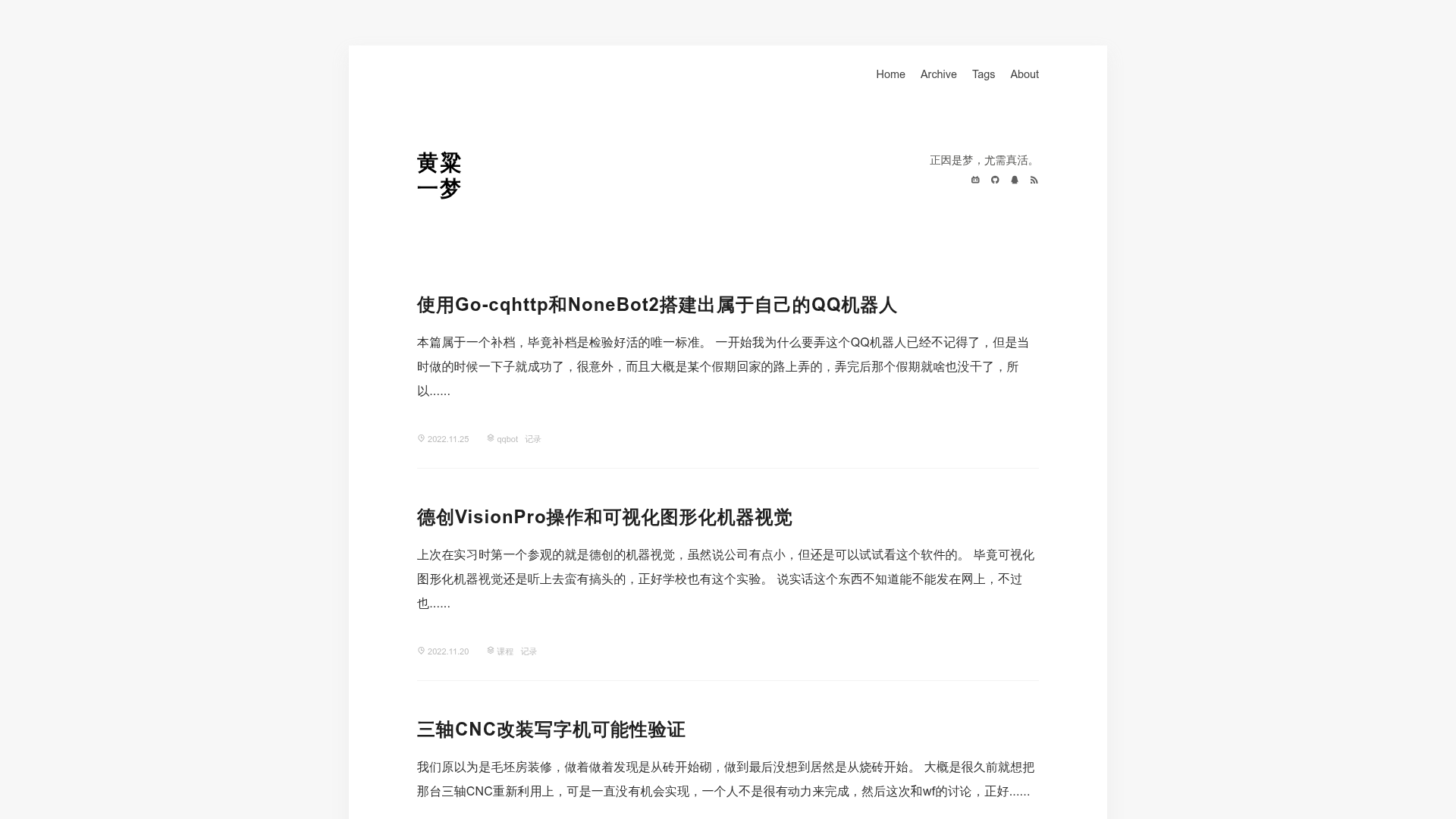
What it is
This personal website serves as a technical blog and project archive for a developer interested in robotics, automation, and embedded systems. The site chronicles hands-on experiments including building a QQ chatbot using Go-cqhttp and NoneBot2, exploring Dechuang VisionPro machine vision software, and converting a three-axis CNC machine into a writing device. Posts read as detailed engineering logs with timestamps, reflecting a maker mindset that values documentation as a way to validate learning. The author shares candid reflections on troubleshooting remote desktop setups, experimenting with computer vision in academic settings, and the iterative nature of hardware projects. Built with Hugo and a custom VarKai design, the site emphasizes substance over polish, offering genuine insight into practical problem solving for hobbyists and students working at the intersection of software and hardware.
This description was generated by AI from the site's public content and may contain errors.
What you can do there
- Read detailed project logs for QQ bot development
- Explore CNC machine conversion documentation
- Learn about VisionPro machine vision experiments
- Follow remote desktop troubleshooting guides
- Browse a personal archive of maker projects
Who it's for
Developers, makers, and engineering students building robotics and automation projects
Frequently asked questions about fdxn.github.io
›What kind of projects are documented on this site
The site covers QQ bot development, machine vision with VisionPro, CNC machine modification, and remote desktop configuration
›Who is the intended audience for this blog
Developers, makers, and students interested in robotics, automation, and embedded software projects
›What technology stack powers the website
The site is built with Hugo static site generator and uses a custom VarKai theme design
›Are the project tutorials suitable for beginners
Posts read as personal engineering logs with technical detail, more suited to readers with some programming or hardware experience
›Does the author provide source code for the projects
The blog focuses on process documentation rather than distributing complete code repositories
›How frequently is new content published
Posts appear irregularly with gaps of several months between entries