
Crohnsandcolitisnutrition
A dietary protocol for resolving Crohn's disease and ulcerative colitis through elimination, resolution, and reintroduction phases.
 Base44
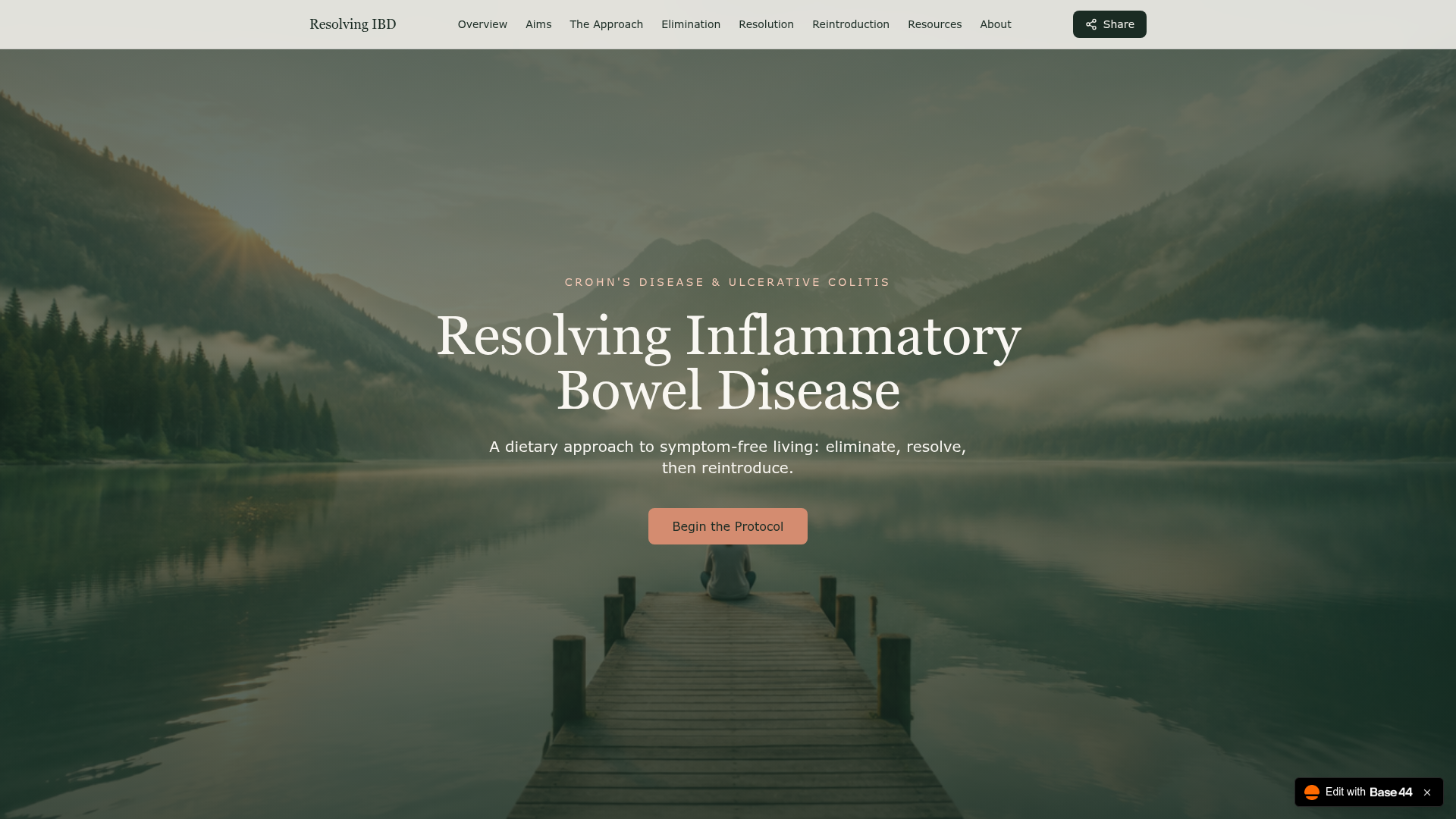
What it is
This website presents a structured dietary approach for managing inflammatory bowel disease, specifically Crohn's disease and ulcerative colitis. The protocol follows a three-phase methodology: elimination of potential inflammatory food triggers, resolution of symptoms and underlying disease processes, and systematic reintroduction of foods to achieve a normalized diet. The approach emphasizes objective confirmation through medical testing such as colonoscopy and inflammatory biomarker analysis to verify disease remission rather than relying solely on symptom relief.
The site explains the rationale behind using diet as a primary intervention, arguing that a targeted elimination strategy carries less risk than long-term medication use. It addresses extraintestinal manifestations of IBD including joint, skin, and eye complications, noting these can serve as early warning signals for impending flare-ups. The content advocates for a forensic, scientific mindset when implementing dietary changes, encouraging systematic tracking rather than haphazard food removal.
Visitors will find detailed explanations of IBD pathology, the limitations of conventional medication-only approaches, and the theoretical basis for dietary triggers such as dysbiosis, emulsifiers, lectins, and other potential inflammatory agents. The protocol is presented as complementary to medical care, acknowledging that acute flare-ups may require short-term pharmaceutical intervention while pursuing long-term dietary resolution.
The resource appears designed for individuals diagnosed with Crohn's disease or ulcerative colitis who are seeking non-pharmaceutical management strategies. It provides a framework for self-directed dietary experimentation with medical oversight, positioning itself as an alternative to lifelong medication dependency. The site does not appear to sell products, supplements, or services, functioning instead as an educational platform for a specific dietary methodology.
This description was generated by AI from the site's public content and may contain errors.
What you can do there
- Educational content on IBD dietary management
- Three-phase protocol framework for self-directed implementation
- Guidance on medical testing for objective progress tracking
- Information on extraintestinal manifestation recognition
- Rationale for dietary vs pharmaceutical-first approaches
Who it's for
People with Crohn's disease or ulcerative colitis seeking dietary management strategies
Frequently asked questions about crohnsandcolitisnutrition.base44.app
›What is the three-phase dietary protocol for IBD?
The protocol consists of elimination of all potential inflammatory food triggers, resolution of symptoms confirmed by medical testing, and gradual reintroduction of foods one at a time to identify personal tolerances.
›Does this approach replace medical treatment for Crohn's disease?
The protocol is presented as complementary to medical care, acknowledging that acute flare-ups may require short-term medication while pursuing long-term dietary resolution under medical supervision.
›How are results measured in this dietary approach?
Results are tracked through both symptom resolution and objective medical confirmation via sigmoidoscopy, colonoscopy, and inflammatory biomarker tests to verify disease remission.
›What foods are eliminated in the first phase?
The elimination phase casts a wide net, removing all potential food agents that may elicit inflammatory responses, though specific food lists are not detailed in the overview.
›Can this diet help with extraintestinal manifestations of IBD?
The site notes that extraintestinal manifestations like skin rashes, joint pain, and eye problems may improve as gut inflammation resolves, and can serve as early flare-up indicators.
›Is there scientific evidence supporting this dietary protocol?
The site references studies implicating dysbiosis, emulsifiers, lectins, and other factors in IBD inflammation, but emphasizes practical results over theoretical mechanisms.
›How long does the elimination phase typically last?
The content does not specify a fixed duration for the elimination phase, indicating it continues until symptoms resolve and objective medical markers confirm improvement.