
ADEST
Brazilian nonprofit providing social services to vulnerable families in Tangará, Rio Grande do Norte
 Lovable
What it is
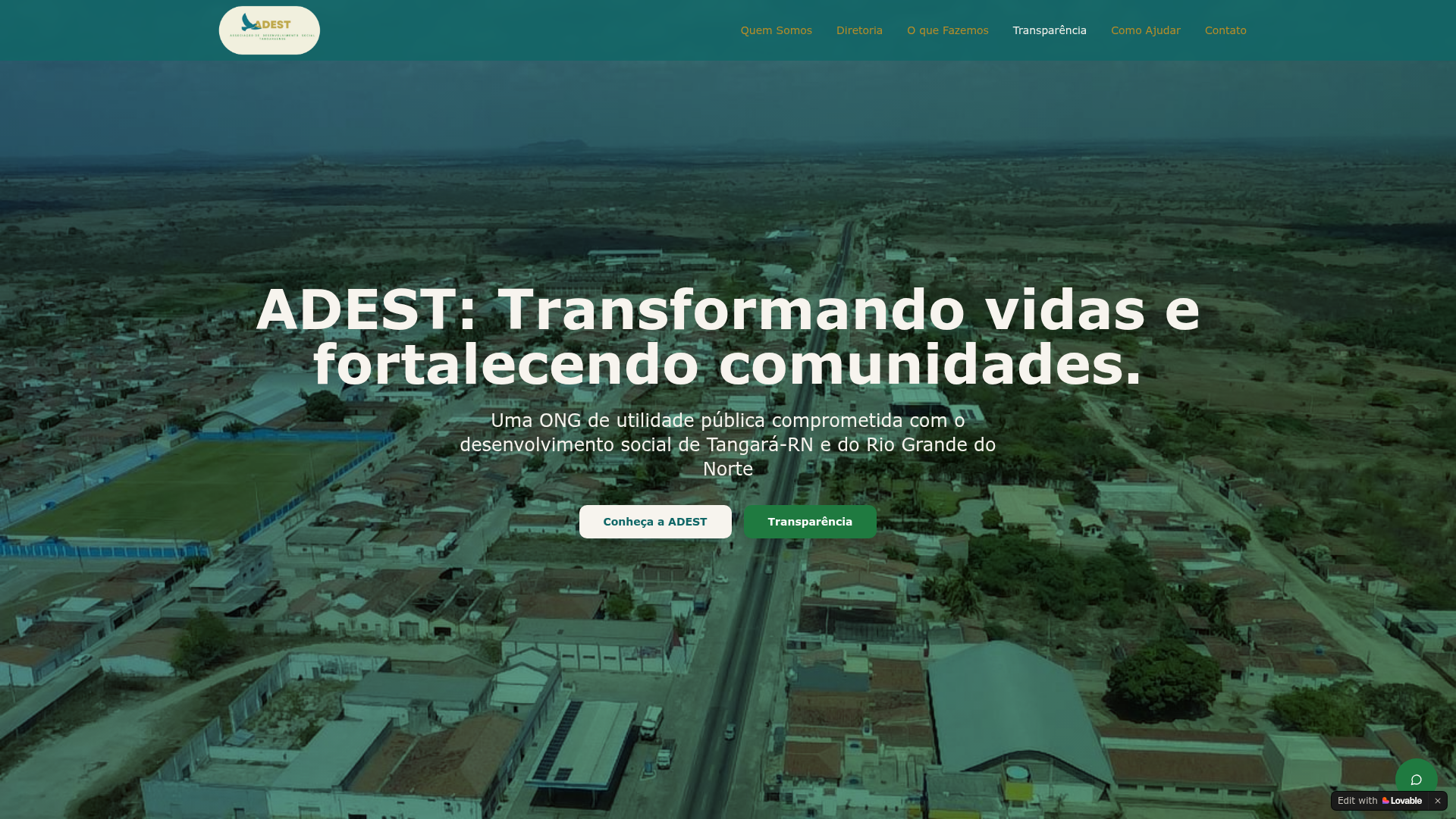
ADEST is a recognized public utility nonprofit organization based in Tangará, Rio Grande do Norte, with over 20 years of history serving more than 1,000 families. The association operates across eight key areas including social assistance, health support, education and prevention, sports and culture, professional qualification, rural support, and complementary assistance. Their programs distribute food, medicine, clothing, and hygiene kits while providing medical and dental care, prenatal support, and services for people with disabilities.
The organization runs educational campaigns against drugs and violence, offers sports and cultural activities for social inclusion, and provides vocational training for job market insertion. Rural producers receive supplies, equipment, and soil preparation support. Additional services include transportation assistance and funeral aid for families in need. All activities are managed with administrative, patrimonial, and financial autonomy.
ADEST serves vulnerable communities throughout Rio Grande do Norte with a focus on Tangará and surrounding areas. The organization helps families experiencing social vulnerability, pregnant women, people with disabilities, rural producers, and individuals seeking professional qualification. Their approach combines direct assistance with long-term development programs that promote dignity, citizenship, and inclusion.
Visitors can support ADEST through monetary donations or by establishing institutional partnerships. The website provides a contact form for inquiries and features transparency information about the organization's governance. The board includes a president, treasurer, and secretary who oversee operations. CNPJ registration and public utility recognition by the state of Rio Grande do Norte validate the organization's legitimacy.
What makes ADEST notable is its comprehensive, multi-sector approach to community development in a specific Brazilian region. The combination of immediate relief services with capacity-building programs creates sustainable impact. Their long-standing presence and state recognition demonstrate credibility in the nonprofit sector.
This description was generated by AI from the site's public content and may contain errors.
What you can do there
- Make a monetary donation
- Become an institutional partner
- Contact the organization via form
- Learn about social programs and services
- View organizational transparency and governance information
Who it's for
Vulnerable families in Tangará-RN, donors, volunteers, partner organizations, rural producers
Frequently asked questions about adest-transforma-rn.lovable.app
›What services does ADEST provide to vulnerable families?
ADEST provides food, medicine, clothing, hygiene kits, medical and dental care, prenatal support, educational campaigns, sports and cultural activities, vocational training, rural production support, transportation assistance, and funeral aid.
›Who can receive assistance from ADEST?
Families in social vulnerability, pregnant women, people with disabilities, rural producers, and individuals seeking professional qualification in Tangará and Rio Grande do Norte can receive assistance.
›How can I donate to ADEST?
The website features a donation button for monetary contributions. Specific donation methods and banking details would be provided after clicking the donation option.
›Can companies partner with ADEST?
Yes, ADEST accepts institutional partnerships from companies and organizations that want to support their social programs. A partnership contact option is available on the website.
›Is ADEST a legally recognized organization?
Yes, ADEST is registered with CNPJ 11.011.816/0001-37 and recognized as a public utility organization by the state of Rio Grande do Norte.
›Where is ADEST located?
ADEST is headquartered in Tangará, Rio Grande do Norte, Brazil, and serves communities throughout the state.
›How can I contact ADEST for more information?
The website provides a contact form where visitors can send messages with questions or requests for additional information about programs and services.